 Blog
Blog
 Jan 21, 2026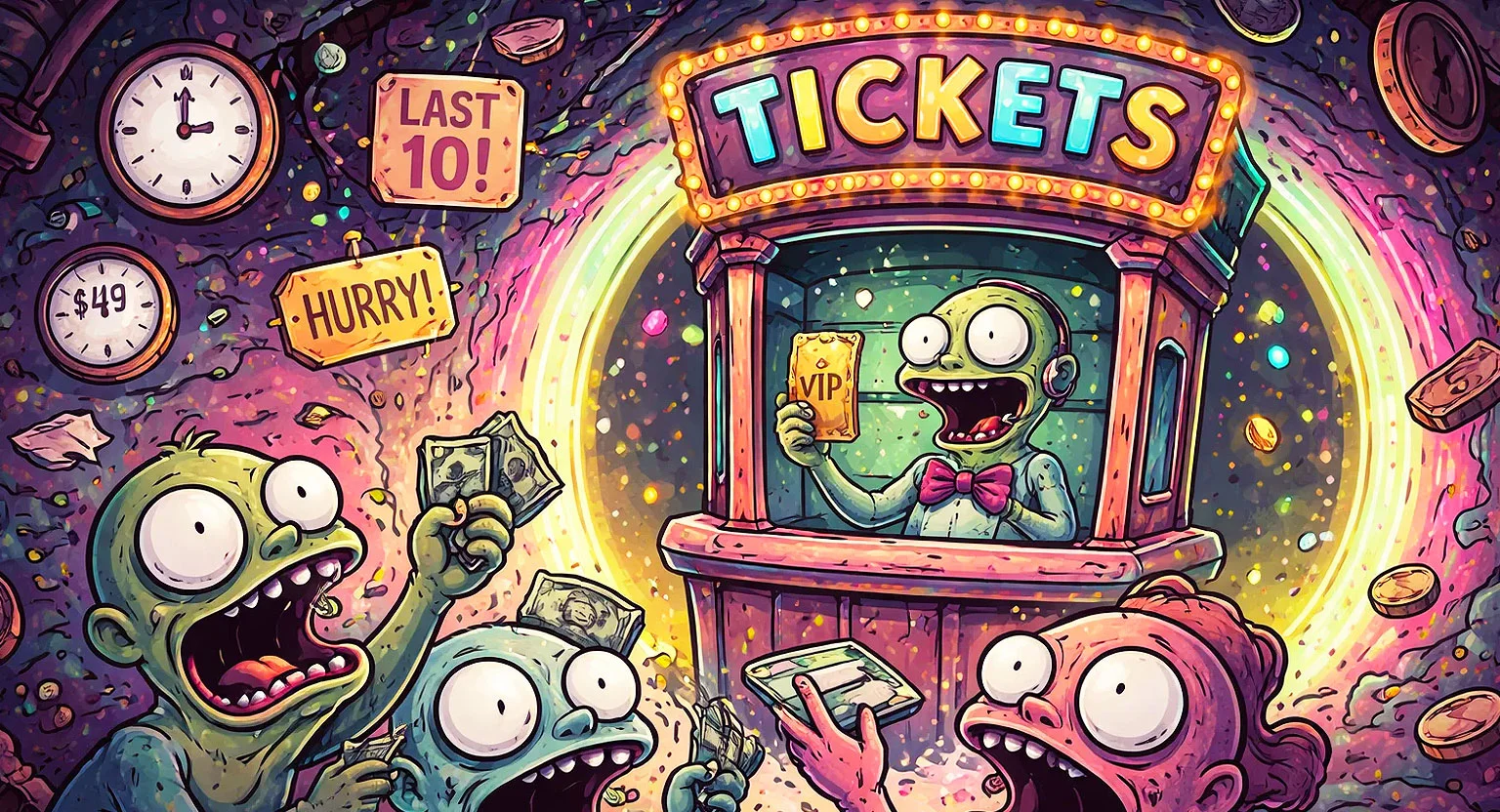
There was a period when setting pricing for an event was something akin to planning a military maneuver. Today you can take a subtler, and more psychological, approach. Using some simple concepts, you can set ticket tiers that lead to more sales and happier customers. To understand how, we need to take the quickest psychology class ever.
The Psychology of Sales – The Basics
Being aware of a couple of basic psychology theories will help event coordinators find the right pricing structure for the next ticketed-event.
Perceived Value – This is something that all of us do with most of our purchases. We look at an item and make a lightning-quick calculation about what we see as its value vs. what it costs.
From a sales perspective, leading with price as opposed to value can affect a person’s decision as to whether they want to complete their purchase.
Example: Saying a ticket costs $100 vs saying that the value of the ticket, meal, and after event meet-and-greet is $300, making the $100 ticket price a value.
Persuasion – This is a broad term for a series of “tactics” that can be used to attempt to influence a customer to take action. Using emotional messaging can be a persuasive sales tactic.
Example: “Traditional,” “Farewell Tour,” and “Exclusive” are just three of many terms that can be used to create an emotional response in a customer and in turn persuade them to purchase a ticket.
Scarcity – More and more people express having FOMO or Fear of Missing Out. Scarcity plays directly into that fear, by encouraging people to take quick action before an item is gone.
Example: Having a counter of available seats or, on the other side, the number of tickets sold helps show popularity. It also builds excitement by saying essentially “All of your neighbors will be there, will you?”
Social Proofs – Reviews, ratings, testimonials, and case studies are all used to give credibility to an event. Authenticity gives people an opportunity to find trust in the event they are considering.
Example: If an event is priced at the higher-end of a potential customer’s budget, reading a review or seeing a rating from someone who experienced it gives them a higher level of confidence to make the purchase.

Keep these theories in mind as we look at the second half of this ticket selling/psychology equation – the actual ticket-selling process.
The Traditional Three Tiers of Ticket Sales
When event organizers are planning their ticket sale strategy, they are generally faced with choosing from three tiers of ticket fee options.

- Setting a Custom Fee – This is often used as a way not just to recoup processing costs, but as a profit center.
- Pass Through Plus – Organizers using this tier add a small, set sales percentage to every ticket purchase.
- Cost Absorption – On this tier, the event covers any ticket processing costs.
To understand how to pair those psychology practices with the ticket selling tiers to increase ticket sales, it helps to start by looking at how consumers react to the three ticket purchasing paths.
Using Past Data to Build Future Success
Over an extended period, TicketsCandy collected a series of consumer sales data points across the three tiers. What we discovered was that there are some clear openings for improved customer sales.
Setting a Custom Fee
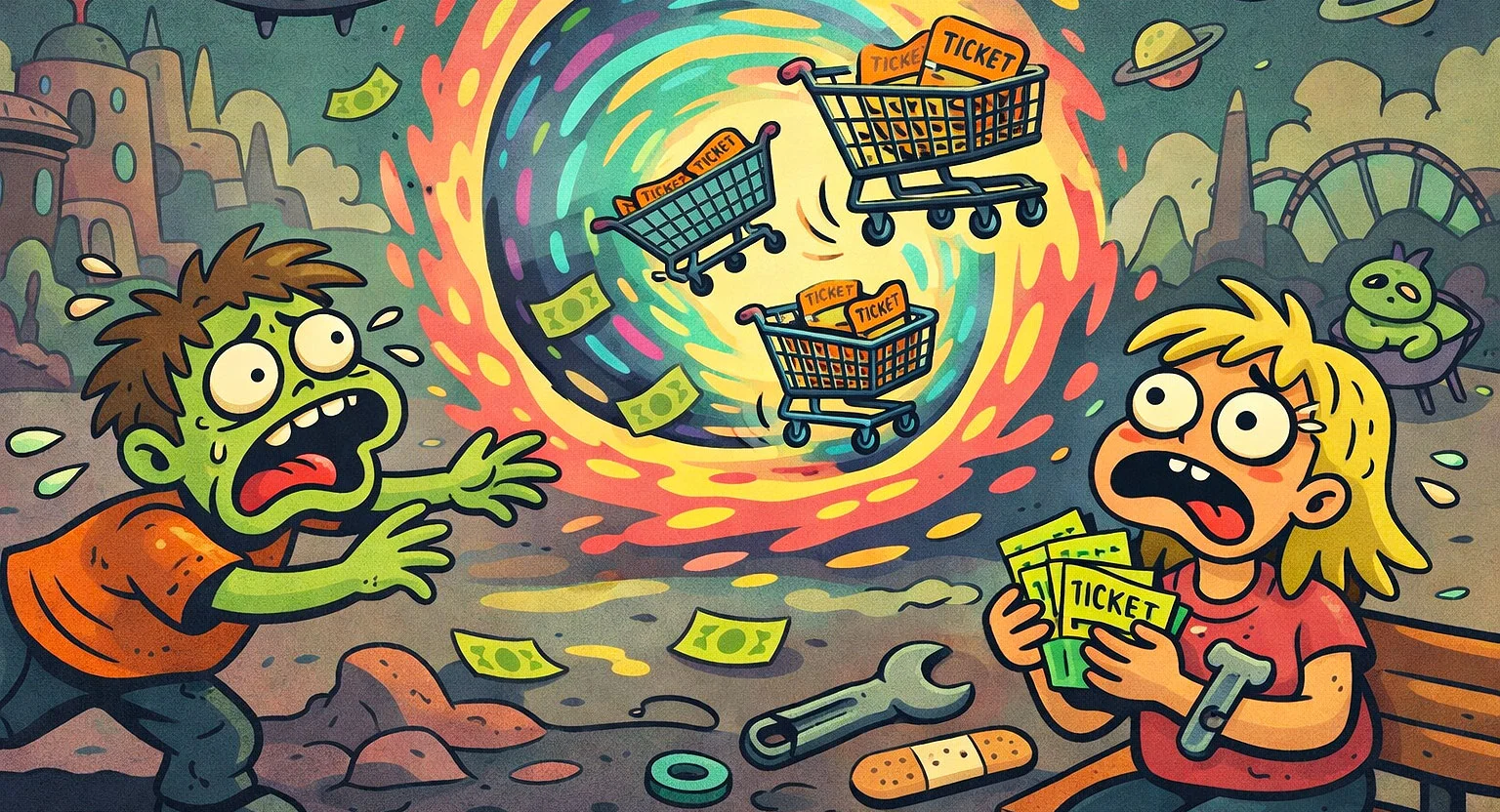
TicketsCandy found that just under 16% of consumers will walk rather than complete their ticket purchase when a custom fee is introduced. The shock of getting hit with a high custom fee at checkout causes them to leave their cart at the counter.
The thing to remember is that you’re not just losing a ticket sale in that moment. People talk. This almost-customer will be complaining to/warning friends, and calling out what they see as a “scam.” And when the event comes around next year, you’re going to have to work twice as hard to move them from the hard no to at least a maybe.
Pass Through Plus
If you tell a customer that there will be an under 3% (of ticket face value) processing and handling fee, most will accept it as an expected cost.
One key – there is a higher acceptance rate when this fee is called out early in the sales process. Customers do NOT like to be surprised at the end of the transaction with even a small addition to their total.
Cost Absorption
Customers obviously like this option because it means they are paying the cost of the ticket and nothing more. Ticket sellers who utilize this ticket selling strategy should make it a part of their sales messaging.
Putting Theory Into Practice
Sabir Naghiyev, founder and CEO of Chrysales, explained that when it comes to a successful sale “It’s about understanding people.” Event pricing psychology helps an event organizer match that understanding with sales strategy and the practicality of the sales process.
TicketsCandy can support any of the sales psychology paths that you take. It gives you a freedom to develop a sales story that other platforms can’t. That’s because TicketsCandy enables you to keep 100% of the sales generated from your event tickets. That’s because it’s essentially free-to-use with a 0.9% usage fee that is passed directly to event goers.
This essentially free service allows you to increase the perceived value your customers experience. This can lead to happier customers who will supply you with the social proofs you need to build customer credibility.
And the TicketsCandy marketing platform helps you utilize tracking pixels, promo engines, and retargeting tools to deliver messages designed to deter FOMO.
The TicketsCandy platform won’t help you just sell tickets, it will help you sell out.
Conclusion
Whether you’re selling tickets for the biggest music act in the world or the annual community jam jamboree, a little psychology can help. And as a FREE ticketing solution, TicketsCandy can back that approach up.
Are you ready to get started?
FAQs
- What’s the ACTUAL TicketsCandy cost?
There is a 0.9% usage fee that is passed directly to event goers. But when you sign up with TicketsCandy and Square, your processing fees will be waived on your first $2,000 in sales.
- Are customer reviews really important?
Reviews, ratings, testimonials, and case studies all give credibility to an event. These social proofs can be an important marketing tool.
- Is psychology really an important sales tactic?
Basic psychology theories can help event coordinators find the right pricing structure for the next ticketed-event.