 Blog
Blog
 Jun 19, 2026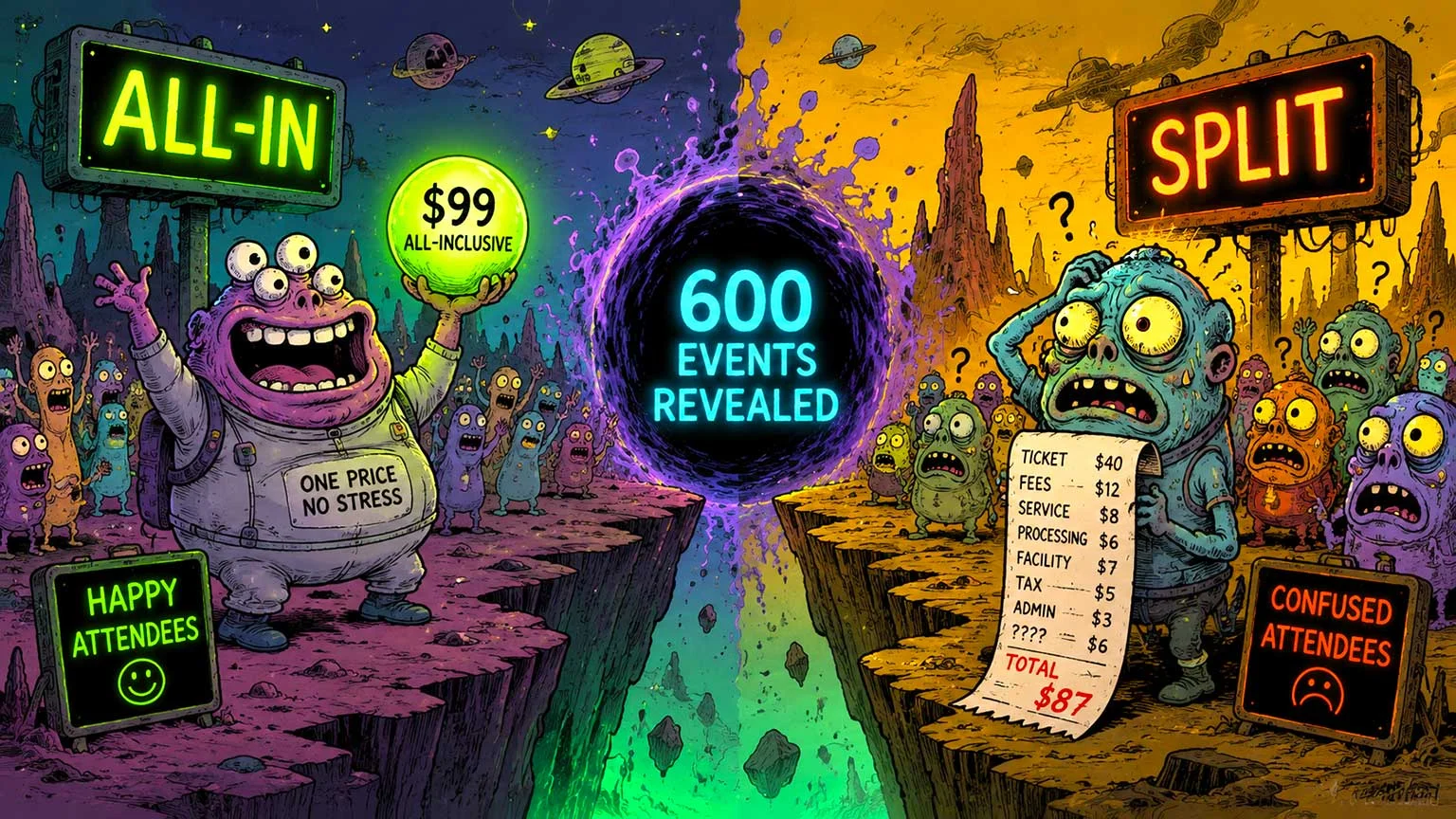
All-in pricing laws are changing how ticket prices are shown online. Instead of displaying a lower ticket price first and adding service fees later, organizers may now need to show the full price upfront.
That creates a fair question: if buyers see the full price right away, will fewer people buy?
To find out, TicketsCandy analyzed 600 events across festivals, attractions, workshops, tours, and other event categories. The goal was simple: measure whether all-in pricing hurts ticket sales compared to split pricing.
All-In vs Split Pricing
There are multiple approaches to event ticket sales. Those include:
- Tiered ticket pricing
- Dynamic/variable pricing
- Add-on bundles
These strategies affect how tickets are priced, but this study focused on something different: how the final price is displayed to buyers.
All-in pricing is when the ticket purchaser sees an initial ticket price that includes all processing and service fees.
Split pricing is when the ticket purchaser initially sees only the price of the ticket with the total ticket price, including processing and service fees, only shown at checkout.
A Ticket Pricing Study
In order to answer the question as to if the all-in pricing model affects ticket sales we devised a study that would look at:
- Sales process drop-off points
- Average Order Value (AOV)
- Revenue per visitor
- Conversion rates
The study reviewed 600 events and approximately 1.8 million ticket page visits.
The event mix included festivals, attractions, workshops, tours, and other ticketed experiences. Half of the events used all-in pricing, where fees were included in the price shown upfront. The other half used split pricing, where fees appeared later in checkout.
About 120 events also rotated between both models, giving us an A/B-style view of how buyers reacted when the pricing display changed.
Discovering Ticket Buying Patterns
This study provided valuable insights into the habits of event-goers when it comes to their ticket buying process. Let’s dig into what we learned.
Overall Conversion Rate: Almost No Difference
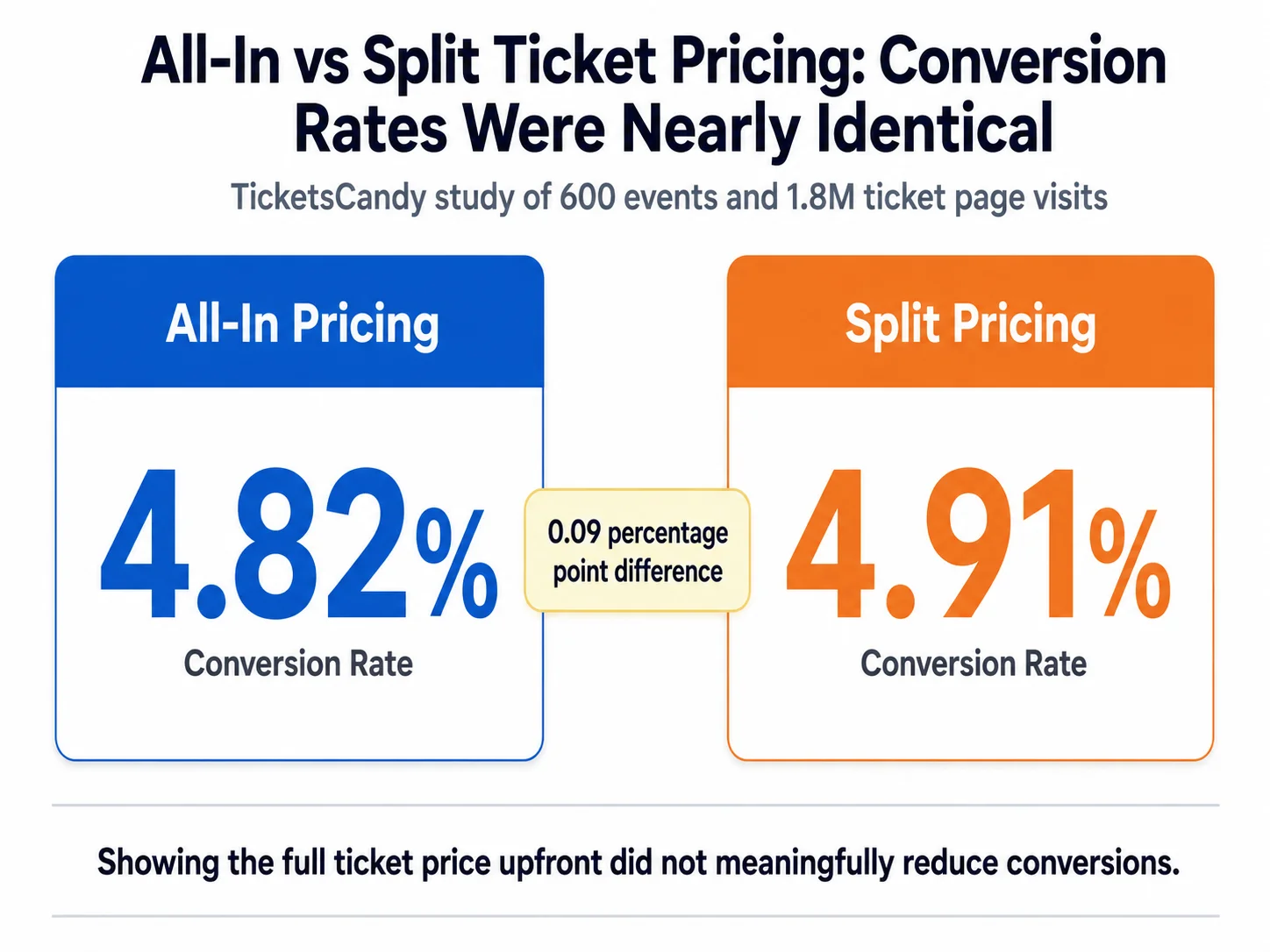
So when we took all of the data, crunched the numbers, and reviewed the results, what we found was that the conversion rate between the two pricing models differed only 0.09 percentage points! This means that the pricing structure has little to no effect on the likelihood that someone would purchase tickets to an event.
| Pricing Model | Conversion Rate |
|---|---|
| All-in pricing | 4.82% |
| Split pricing | 4.91% |
Where Buyers Dropped Off
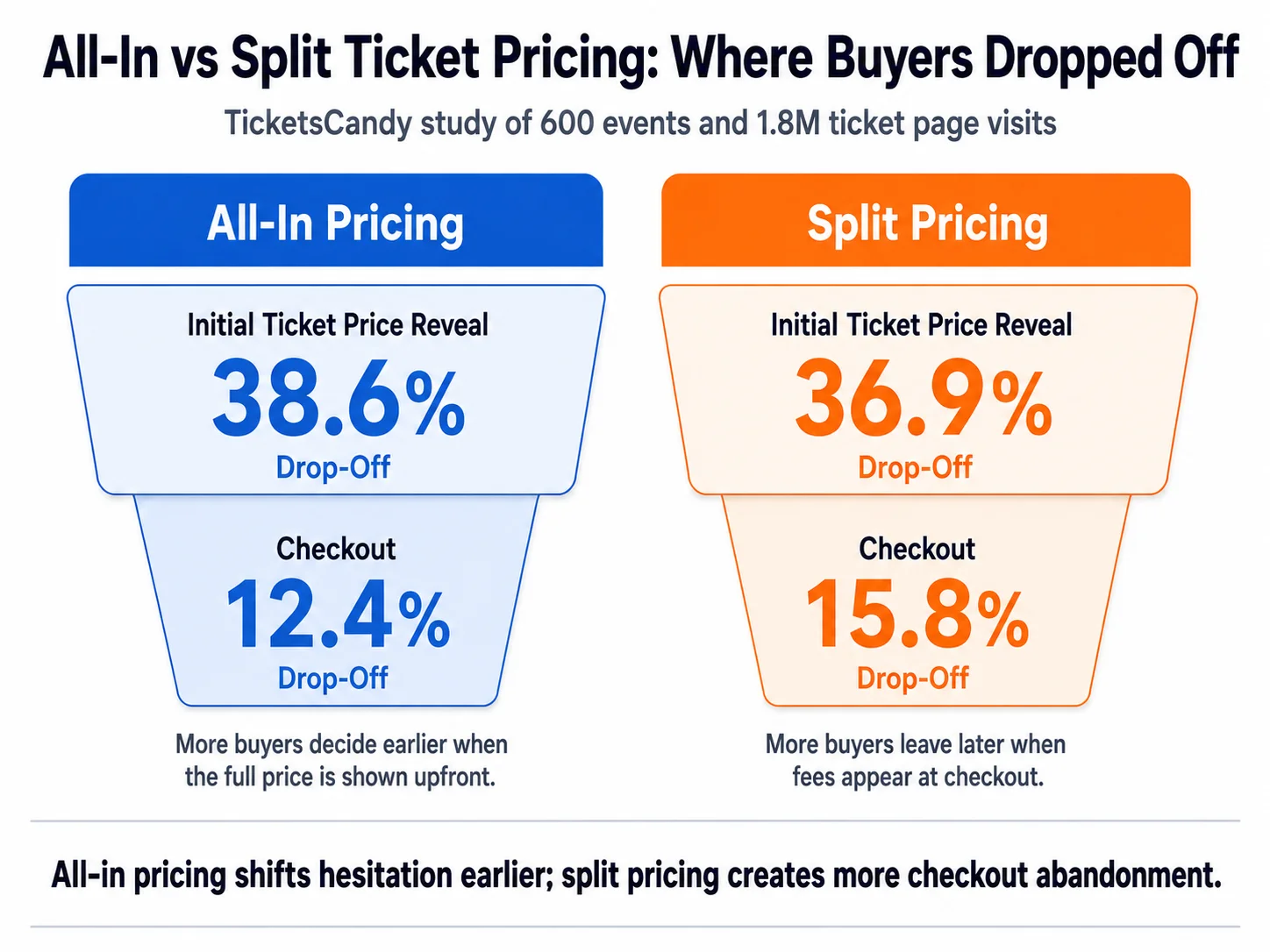
On the ticket selection page, all-in pricing had a slightly higher drop-off rate.
| Pricing Model | Drop-Offs: Initial Ticket Price Reveal |
|---|---|
| All-in pricing | 38.6% |
| Split pricing | 36.9% |
That small difference makes sense. With all-in pricing, buyers see the full price earlier, so some people make their decision right away and leave before moving forward.
But the pattern changed at checkout.
| Pricing Model | Drop-Offs: Checkout |
|---|---|
| All-in pricing | 12.4% |
| Split pricing | 15.8% |
Split pricing performed slightly better at the first step because the initial ticket price looked lower. But it lost more buyers later, when service fees and processing fees appeared during checkout.
In simple terms, all-in pricing creates a little more hesitation upfront, while split pricing creates more frustration later. The two effects mostly balance each other out.
Average Order Value and Revenue Per Visitor
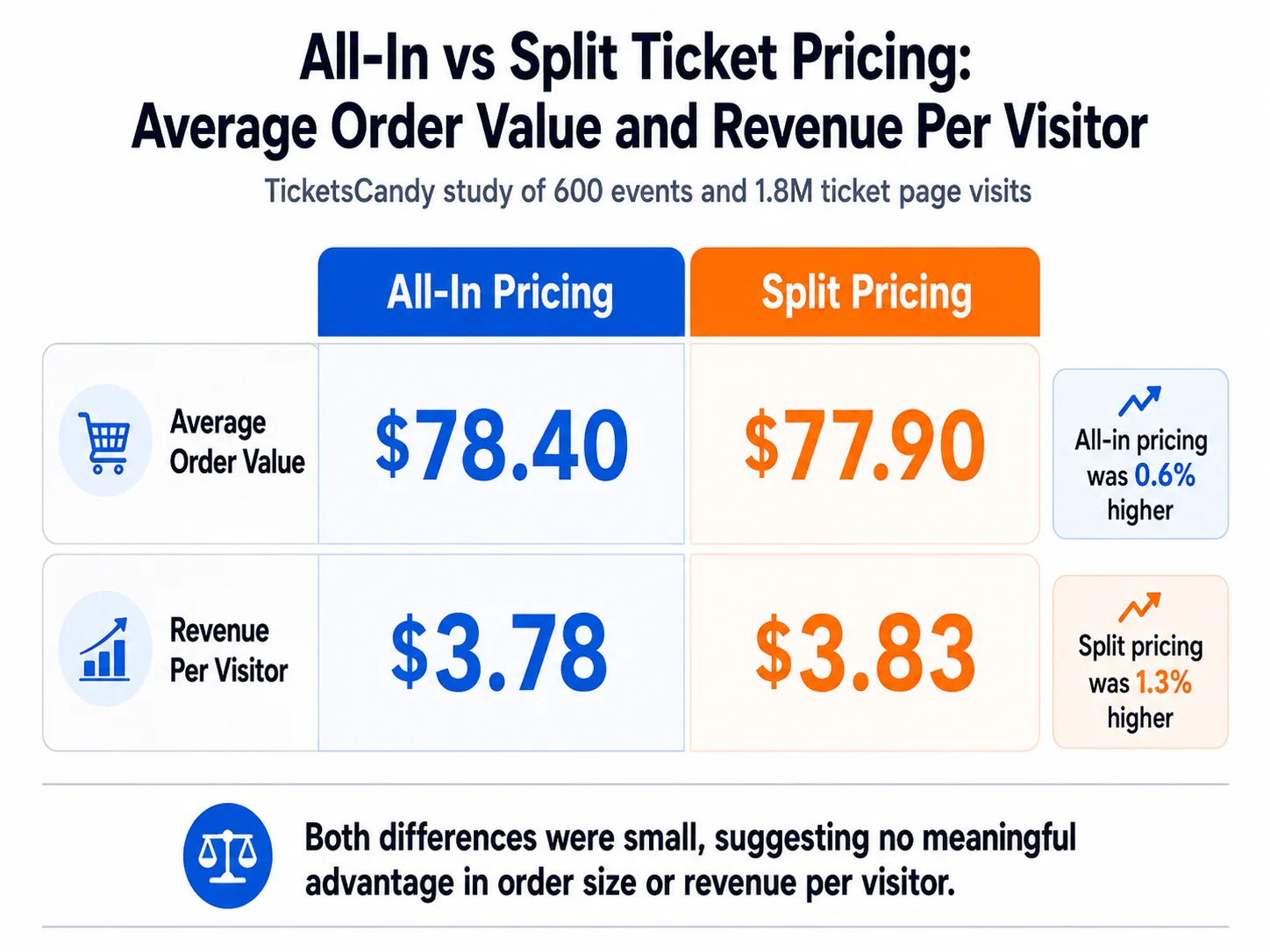
The all-in pricing model had a slightly higher average order value (AOV), while split pricing had slightly higher revenue per visitor. However, both differences were very small.
| Pricing Model | AOV | Revenue Per Visitor |
|---|---|---|
| All-in pricing | $78.40 | $3.78 |
| Split pricing | $77.90 | $3.83 |
All-in pricing had a 0.6% higher average order value. This means buyers did not reduce their ticket quantity or choose cheaper tickets when they saw the full price upfront.
Split pricing had 1.3% higher revenue per visitor, but the difference was small enough to fall within normal variation.
The takeaway is that neither model created a meaningful advantage in order size or revenue per visitor.
How Ticket Price Changed Buyer Behavior
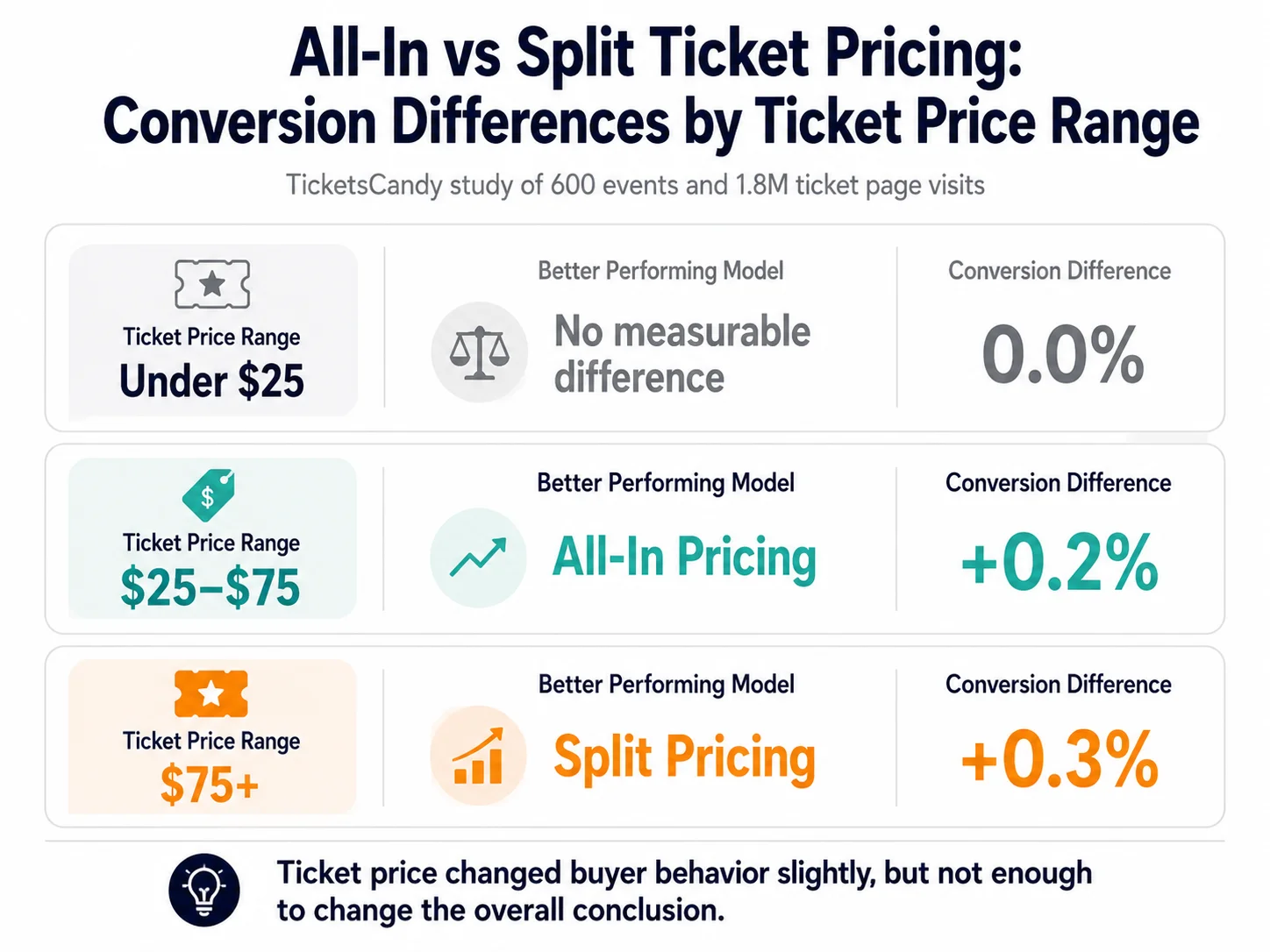
Ticket price did create small differences, but not enough to change the main conclusion.
For events under $25, there was no measurable difference between all-in and split pricing.
For events priced between $25 and $75, all-in pricing performed slightly better, with a 0.2% conversion advantage.
For events over $75, split pricing performed slightly better, with a 0.3% conversion advantage.
This makes sense because higher prices can create more upfront sticker shock when buyers see the full amount right away. But even at higher price points, the difference was small.
| Ticket Price Range | Better Performing Model | Conversion Difference |
|---|---|---|
| Under $25 | No measurable difference | 0.0% |
| $25-$75 | All-in pricing | +0.2% |
| $75+ | Split pricing | +0.3% |
Device Behavior Differences
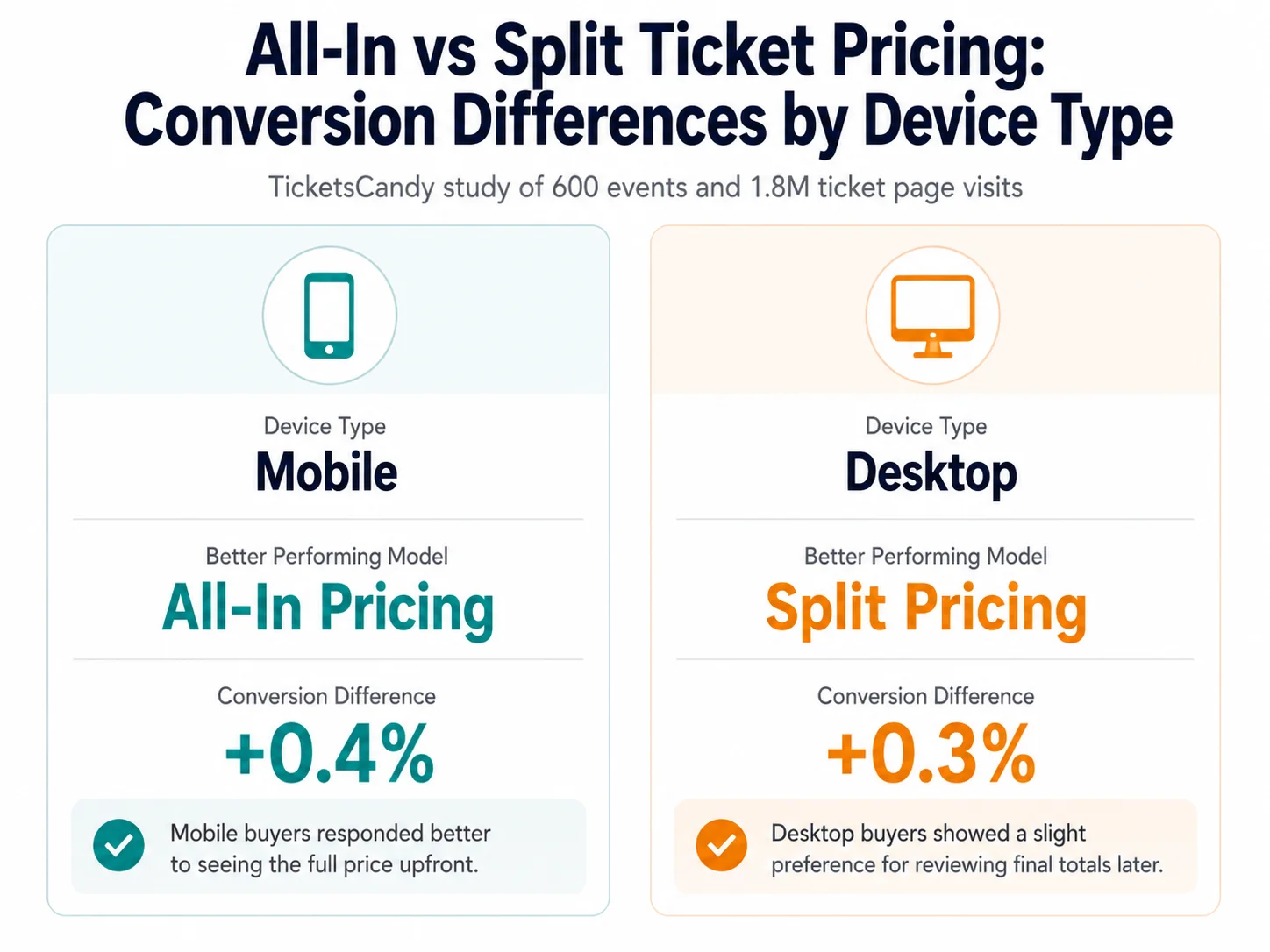
We also looked at how buyers behaved on different devices.
| Device Type | Better Performing Model | Conversion Difference |
|---|---|---|
| Mobile | All-in pricing | +0.4% |
| Desktop | Split pricing | +0.3% |
Mobile users performed slightly better with all-in pricing, showing a 0.4% higher conversion rate. This makes sense because mobile buyers usually have less patience for extra steps or surprise fees during checkout.
Desktop users showed a slight preference for split pricing, with a 0.3% higher conversion rate. Desktop buyers are more likely to compare events and checkout totals across multiple tabs before making a decision.
These differences were small, but they show that device behavior can slightly change how buyers react to pricing. Mobile users seem to prefer a clearer price upfront, while desktop users may be more comfortable reviewing the final total later in the checkout process.
Benefits of All-In Pricing
With a negligible difference between pricing models, let’s look at the benefits All-in offers.
- Easier compliance – As all-in pricing laws become more common, showing the full price upfront helps organizers stay aligned with changing pricing rules.
- Greater customer satisfaction – You’ll see less complaints from people who are surprised by fees at checkout.
- Increased consumer trust – Customers won’t feel like your sales process is built on a bait-and-switch price.
- Faster checkouts – With fewer back-and-forth steps during the checkout process, and less time needed to contemplate pricing changes, the all-in pricing model leads to checkouts that are 8% faster on average.
So What Does Affect Purchase Decisions
In the study, pricing format had less than 2% correlation with conversion variance. The stronger predictors were event type, urgency, and brand trust.
- Type of event – Is the event a small intimate show that has a limited number of available tickets or is it a multi-day festival where capacity isn’t as concerning?
- Timing of the sale – Is there an urgency to purchasing a ticket due to the date of the event or for a special promotional offer?
- Brand awareness – Are you buying tickets for a known-entity or is this a new-to-you performer/event?
What This Means for Event Organizers
This comprehensive study shows fairly conclusively that an all-in ticket pricing model will not disrupt your revenue stream. You may lose some potential purchasers on the front end of the process, but split pricing loses more buyers later when fees appear at checkout.
In the end, the difference between the two models is extremely small. All-in pricing does not remove price sensitivity, it simply shifts where buyers make their decision.
TicketsCandy not only operates on an all-in pricing model, but with the lowest fees in the industry, the visible price difference is minimal. It’s a service and a strategy that can benefit events of all sizes.
Discover how TicketsCandy can help your event succeed.