 Blog
Blog
 Sep 6, 2026
For years, consumers purchasing a ticket to an event have done so with some trepidation. That’s because, more often than not, the price that initially captured their attention would not end up being the one they would see at checkout. That’s because as they moved through the purchasing process a variety of venue fees and processing charges would be added. In the end the price per ticket at checkout was substantially higher.
In Europe this process is called “Drip Pricing” while in the United States it’s known as adding “Junk Fees.”
After years of complaints, governments around the world have started to step up to enact laws and set regulations which are intended to address what many ticket buyers felt were deceptive practices. While consumers may welcome these guardrails, event promoters, concert producers, and the companies selling tickets have been forced to navigate a new ticket pricing landscape. One in which the question becomes: what is the true impact of all-in pricing laws on ticket sales?
What Is All-In Pricing?
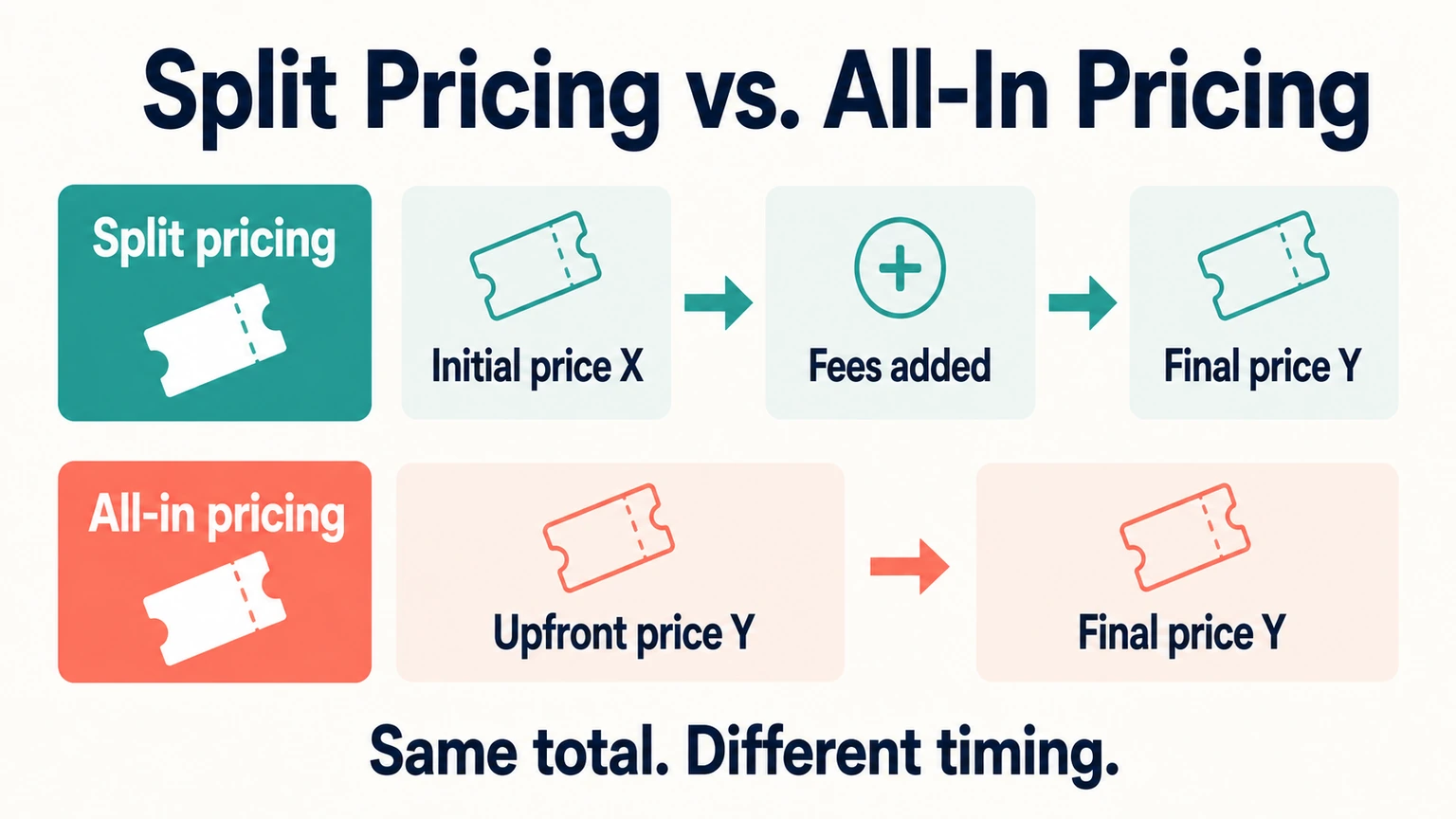
All-in (or all-inclusive) pricing laws require organizations (and the ticket platforms that they use) to show ticket buyers the true, actual price of a ticket at the beginning of the process.
In the old model, the initial price of a ticket might be posted as X but after fees and charges were added, the final price of the ticket was actually Y. In an all-inclusive model, the initial and final price of the ticket is simply just Y.
The Advantages of All-In Ticket Pricing
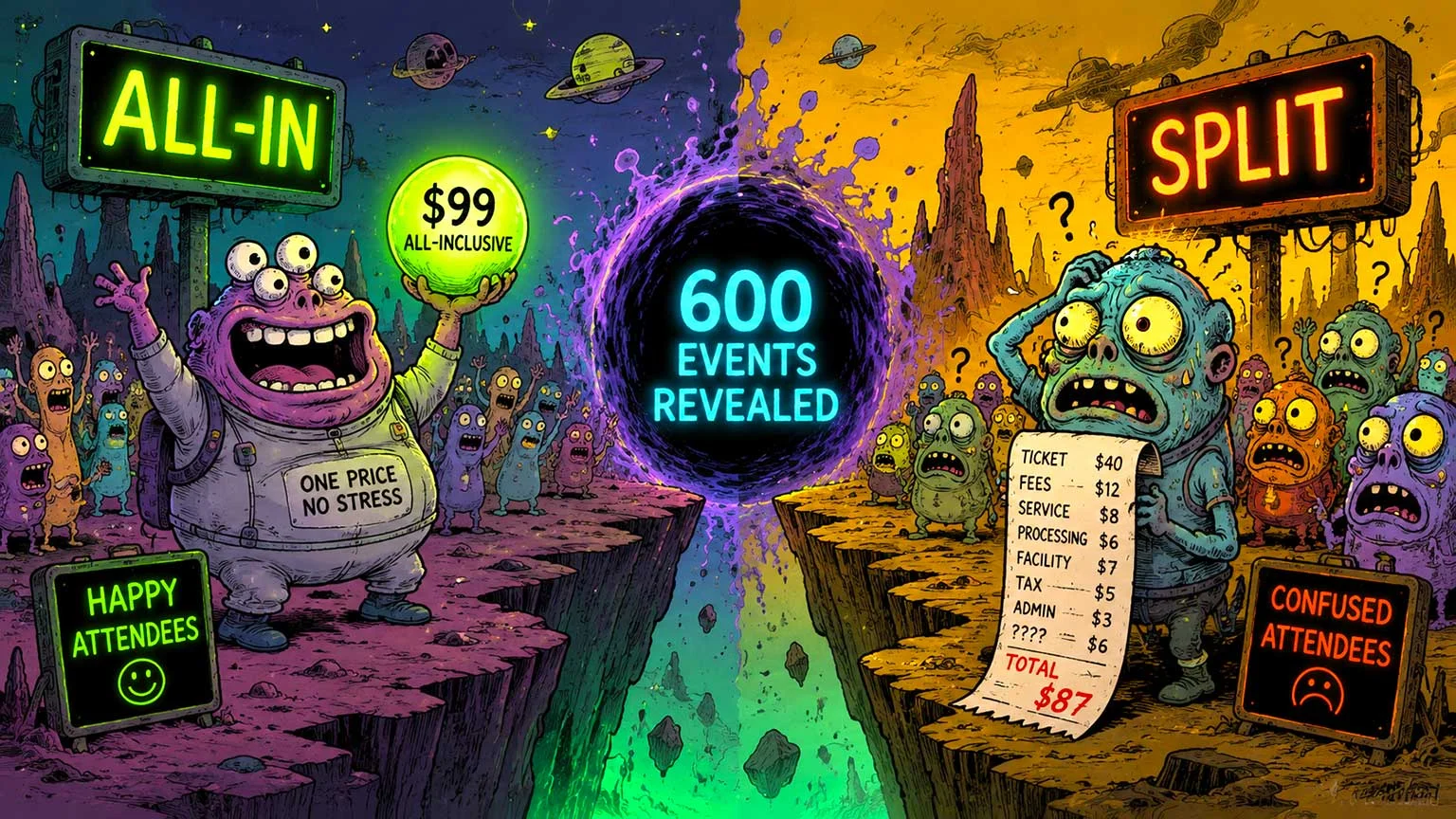
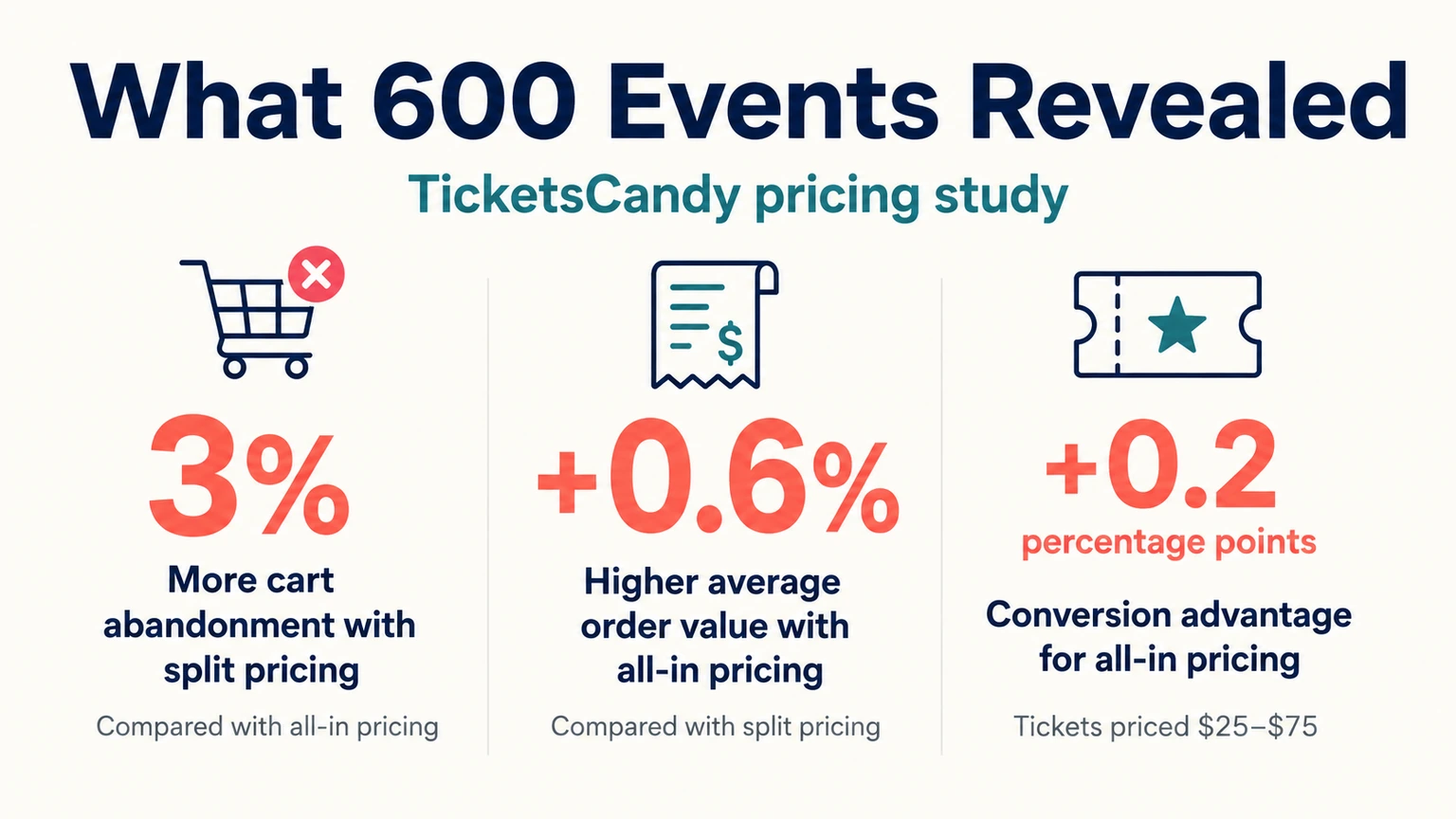
A TicketsCandy study on pricing models discovered that when ticket selling platforms utilized an all-inclusive price model, the conversion rates remained steady regardless of event or venue.
This insight was just one of the data points that came from a review of ticket sales for 600 events. That review also showed that:
- A split pricing ticket selling model led to a 3% increase in cart abandonment at checkout (vs. all-in pricing)
- The Average Order Value (AOV) of all-in pricing orders was 0.6% higher than split pricing sales.
- There is a 0.2 percentage-point difference in conversion rate in favor of all-in pricing for tickets priced between $25 and $75.
The results of this study show that concerns that consumers would see a larger number upfront and walk away from their purchase have not come to pass.
The Benefits of All-In Pricing Laws
Under an all-in pricing model, ticket buyers can find tickets in their price range right from the start. By removing surprise fees and add-on charges from each step in the checkout process, this pricing model also provides buyers with purchase transparency which creates a sense of trust. Multiple studies have shown how important trust is for building, and maintaining, customer loyalty.
| 86% of ticket buyers will move their purchase to a competitor when they feel a lack of transparency. |
Studies have shown that more than 40% of consumers will abandon their cart when hidden fees are discovered. But when consumers trust the process and complete the sale, they are more likely to return in the future.
Pricing Regulations Across Global Markets
Around the world, consumers are sharing concerns regarding the practices and process of purchasing tickets. To meet these concerns, many governments have started to implement regulations and laws to eliminate junk fees and bring a greater transparency to the ticket purchasing process.
Note: This is just a sample of some of the regulations currently in effect around the globe.
| Region | Regulation | Detail |
|---|---|---|
| Australia | Australian Consumer Law | Because of the stipulations in this law, ticket sellers doing business in Australia must display a single, unified price for tickets to an event.
Specifically, the law states that ticket sellers “Not hide costs or other details from consumers.” It prohibits the practice of drip pricing. Instead the base ticket price along with taxes, duties, and any set fees must be combined into one up-front price. |
| Ontario, Canada | Ticket Sales Act, 2017 | This Ontario law covers a number of the initial sales and resale practices for ticket sellers. One of the requirements it makes is “Every primary seller that makes a ticket available for sale shall ensure, that the offer discloses the total price of the ticket and includes a separately itemized list of any applicable fees, service charges and taxes.” |
| European Union | EU Consumer Rights Directive | All European Union (EU) member nations must adhere to this pricing law which states that consumers must be shown the all-inclusive price (including taxes and fees) of any item at the beginning of the sales process. |
| United Kingdom | UK Competition and Markets Authority (CMA) regulations | Guidance from the CMA says that businesses “must be transparent when displaying pricing information “ |
| United States | FTC Rule on Unfair or Deceptive Fees | Effective May 12, 2025, the FTC Rule on Unfair or Deceptive Fees requires businesses selling or advertising live-event tickets to prominently display the total price upfront, including mandatory fees that can be calculated in advance. Government charges, shipping, and optional add-ons may be disclosed separately before payment. |
TicketsCandy Meets Global Regulations
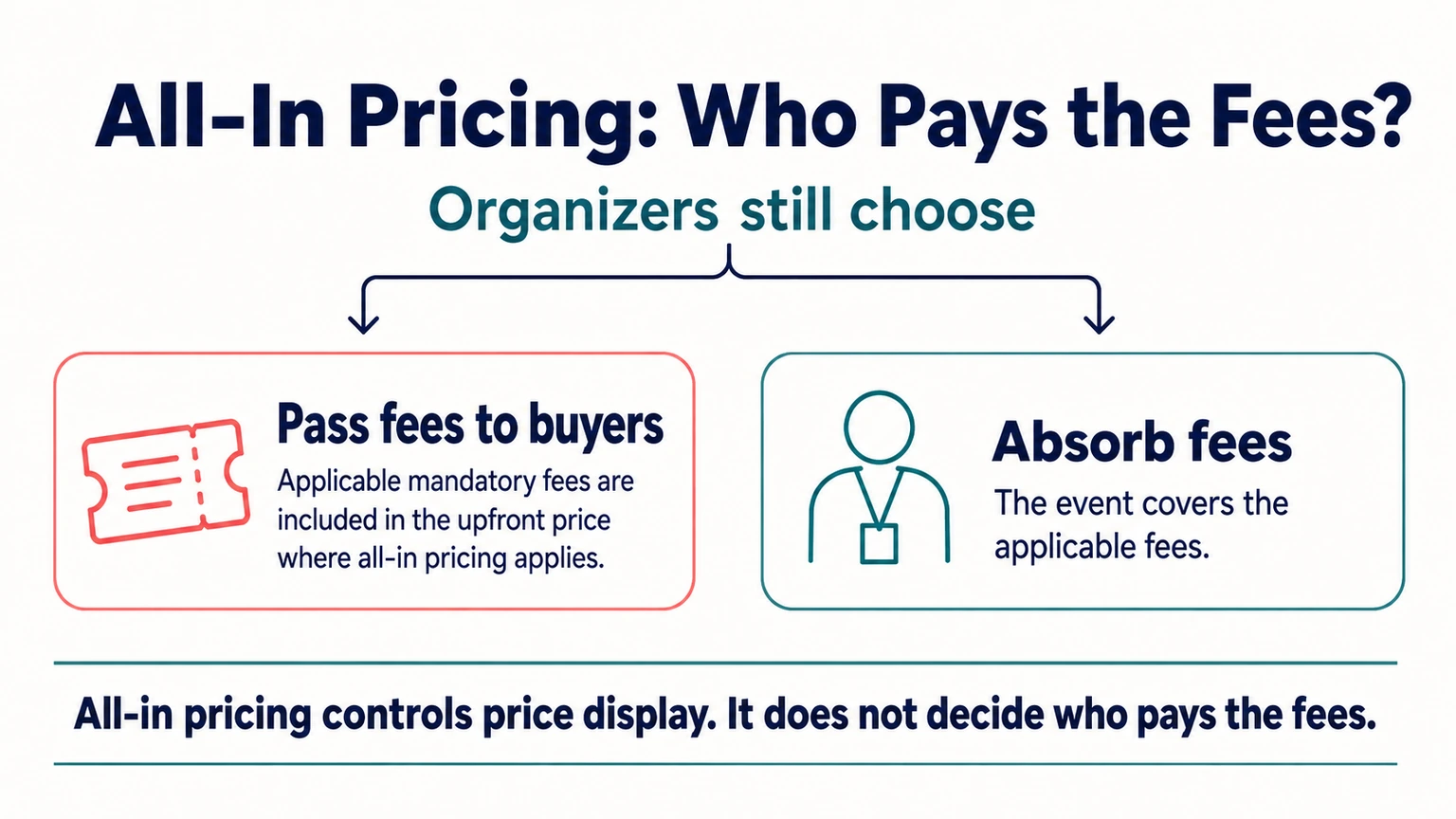
All-in pricing does not determine who pays the fees. Organizers can still choose whether applicable fees are passed to ticket buyers or absorbed by the event. When fees are passed to buyers in a market where all-in pricing applies, TicketsCandy incorporates those mandatory fees into the price displayed upfront.
In order to meet the ticket selling standards set by these all-in pricing regulations, some ticketing platforms require manual intervention to keep ticket prices reflective of local laws. This means someone must go into the system and manually adjust prices and settings. It’s a time intensive process and, if not completed accurately in a timely manner, could run against legislative mandates. And for organizations using those types of sales platforms they face a very real concern that they have been updated and are legally compliant.
Other platforms, like TicketsCandy, have automatic settings in place so tickets that are advertised in a country or region with all-inclusive regulations will show ticket buyers the required initial price with all fees included. And with no manual intervention needed. This keeps organizations in compliance with the law and enables purchasers to know the true cost of attending an event.
All-In Pricing Doesn’t Have to Hurt Sales
For years there was a certain amount of skepticism and frustration that went along with purchasing a ticket to an event. People knew that, because of the fees that would be added along the way, the ticket price they saw would not be the one they would be paying. And they hoped that they would still be able to afford that final number.
By letting ticket buyers know upfront what the total cost of an event is you eliminate that disappointment and frustration, creating a happier purchasing experience. All-in pricing flips the old standard of ticket sales in favor of the consumer. This can result in more satisfied, and loyal, ticket buyers.